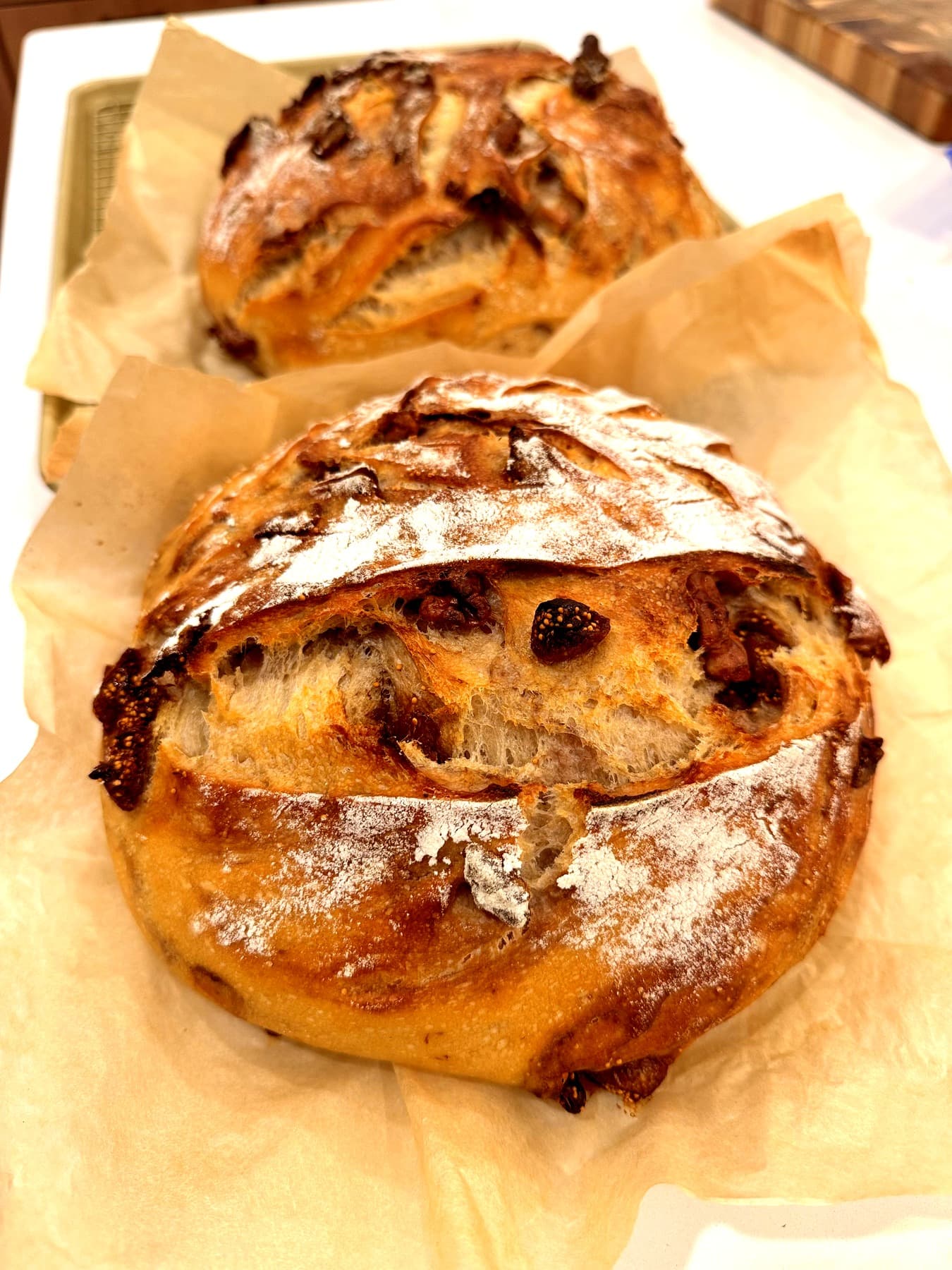
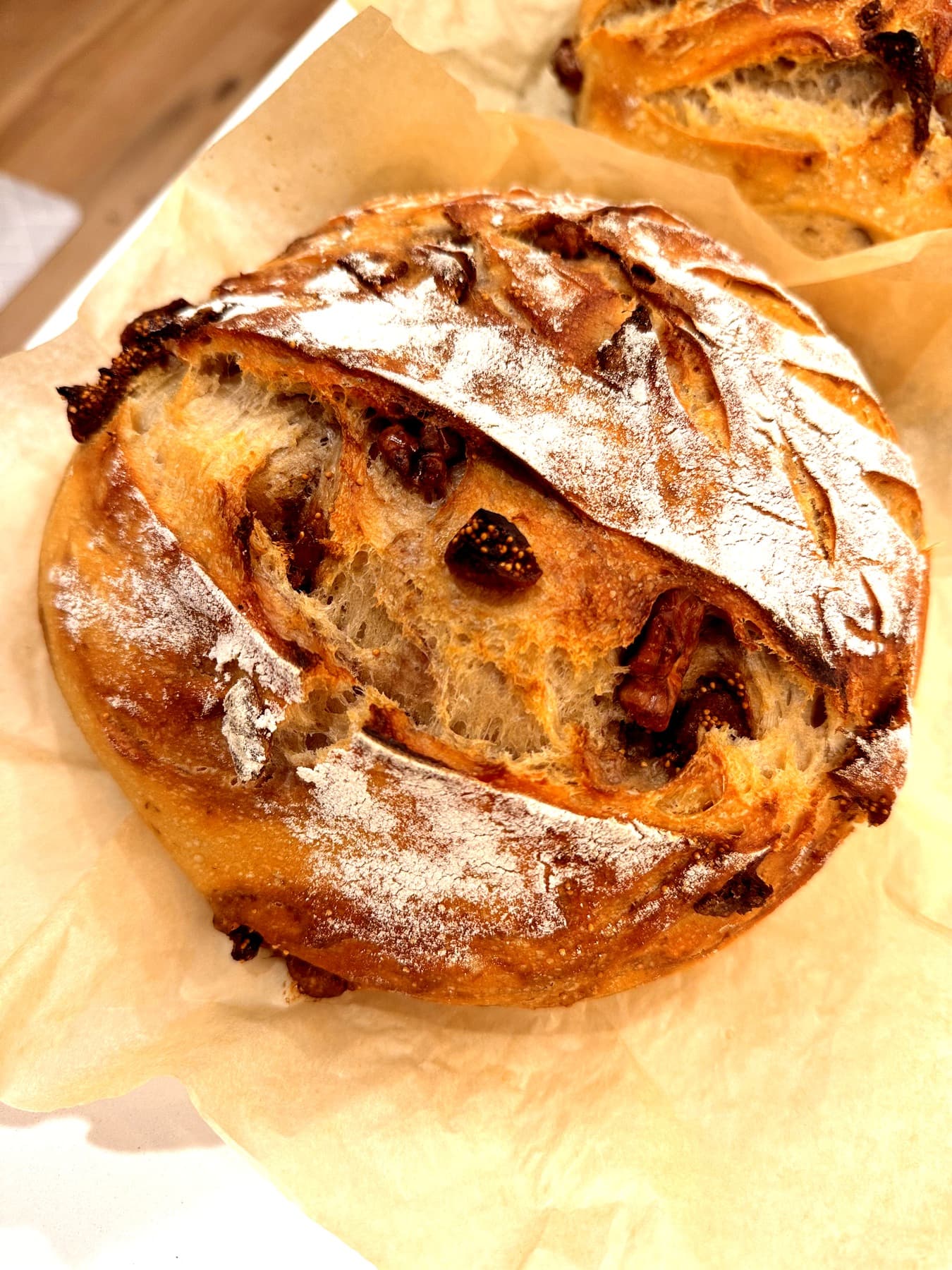
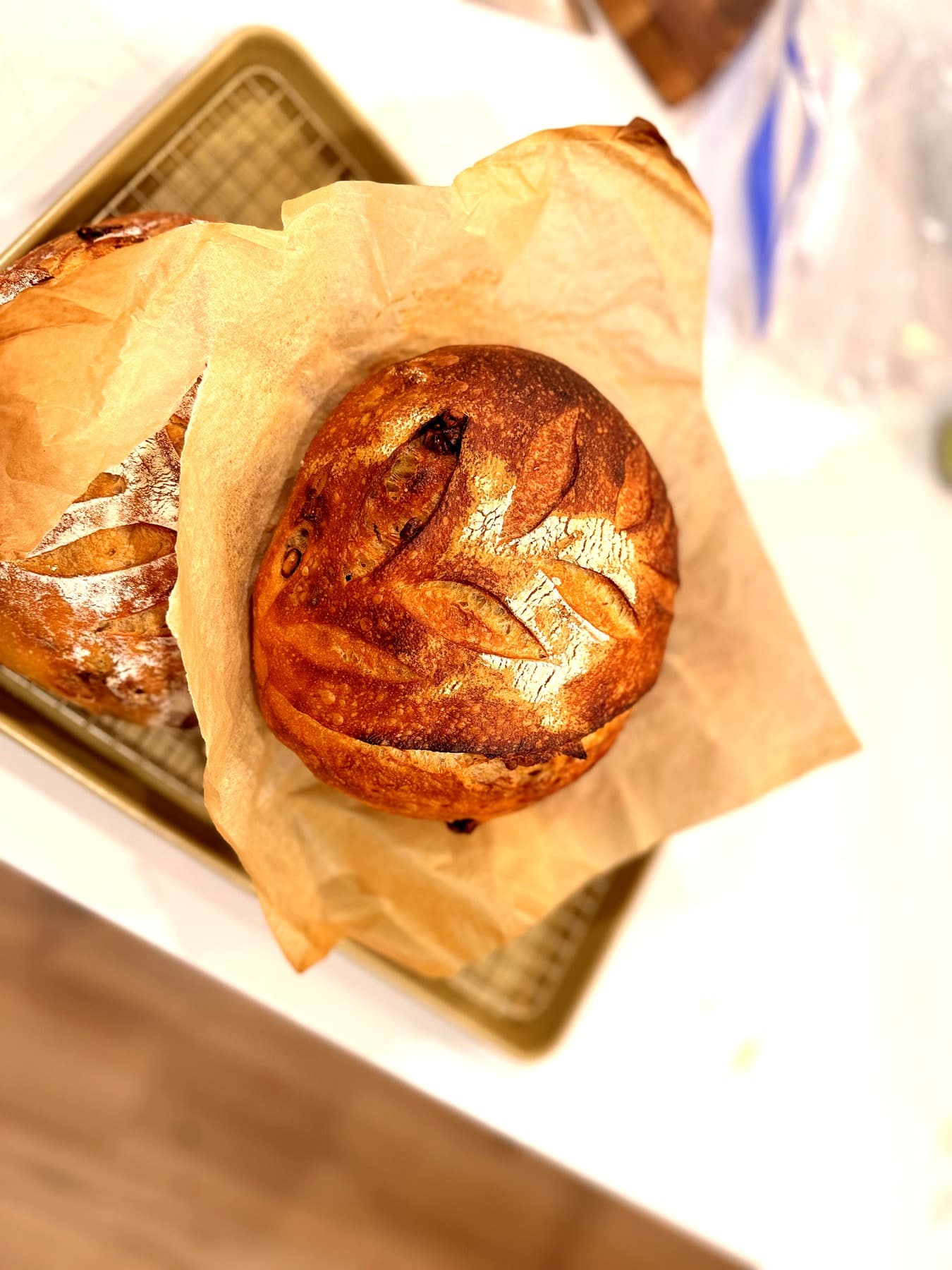
This one started as an experiment and became a regular. Dried figs are sweeter and denser than most fruits you'd add to bread, and when they bake inside a sourdough they soften into something almost jam-like, releasing their sweetness into the surrounding crumb. The walnuts add a slight bitterness and crunch that keeps the whole thing from going too sweet.
It's a loaf that works equally well sliced thin and eaten plain, or toasted with a little butter and a soft cheese. My personal preference is with a mild blue or a creamy brie, where the contrast between the sweet fruit and the savory cheese is exactly the point.
Formula
| Ingredient | Weight | Baker's % |
|---|---|---|
| Bread flour | 460g | 92% |
| Whole wheat flour | 40g | 8% |
| Water | 380g | 76% |
| Starter (active) | 100g | 20% |
| Fine sea salt | 10g | 2% |
| Black Mission figs, quartered | 120g | — |
| Raw walnuts, roughly chopped | 80g | — |
The small amount of whole wheat in the base flour adds a bit of earthiness that works well with the fruit. If you only have bread flour, it will still be excellent.
On the Inclusions
Figs. Black Mission figs have the deepest flavor of the dried varieties. Medjool or Turkish figs will work, but they're softer and less jammy when baked. Whatever you use, stem them and cut them into quarters. Smaller pieces mean better distribution throughout the crumb and less chance of the fruit sitting in large dense pockets.
If your figs feel very dry, soak them in warm water for 10 minutes and pat them dry before adding. Excessively dry figs can draw moisture out of the dough as it ferments.
Walnuts. Raw walnuts have a slightly bitter edge that toasted ones don't, and I prefer that here. It balances the sweetness of the figs and keeps the flavor complex. Roughly chop them rather than using them whole. Large walnut pieces create weak points in the crumb when you score and open the loaf.
Mix and Bulk Fermentation
Mix flour and water until shaggy, then autolyse for 30 minutes. Add the starter and salt, and work them fully into the dough.
Add the figs and walnuts at the end of mixing, folding them gently into the dough rather than kneading them in. Aggressive mixing will break the figs down and stain the entire crumb purple. Fold them in and accept that distribution will be slightly uneven. That's part of the character of the bread.
Perform 4 sets of stretch and folds during the first 2 hours, with 30 minute intervals. The inclusions will shift around during folding. Tuck any loose pieces back into the dough as you go.
Total bulk is around 5.5 hours at 76°F. You're looking for 50 to 60% volume increase, bubbles at the surface and sides, and a dough that passes the windowpane test in the areas between inclusions.
Shaping
Pre-shape gently and bench rest for 20 minutes. The figs can make the surface sticky, so use enough flour on your bench to prevent tearing.
Final shape into a boule or batard. Don't over-tighten when shaping. The inclusions create tension in unexpected places and over-tightening can cause the loaf to tear along fig or walnut pockets rather than along your score.
Cold retard overnight, 10 to 14 hours.
Baking
Preheat your Dutch oven and oven to 500°F for a full 45 minutes. Score the loaf with a single deep arc down the center or an ear cut on one side.
Bake covered at 500°F for 20 minutes. Remove the lid and drop to 450°F. Continue baking for 22 to 26 minutes until the crust is deep mahogany and the loaf sounds hollow when tapped on the base.
Let it cool for at least 2 hours before slicing. The crumb around the figs needs time to set. If you cut early, those areas will be gummy.
How to Eat It
Thin slices, nothing on them, is the best starting point. Once you've tasted it plain you'll know what you want next. A small amount of salted butter, a smear of soft cheese, or nothing at all. It keeps well for two days at room temperature and a little longer if you wrap the cut end tightly.
What's inside
Photos